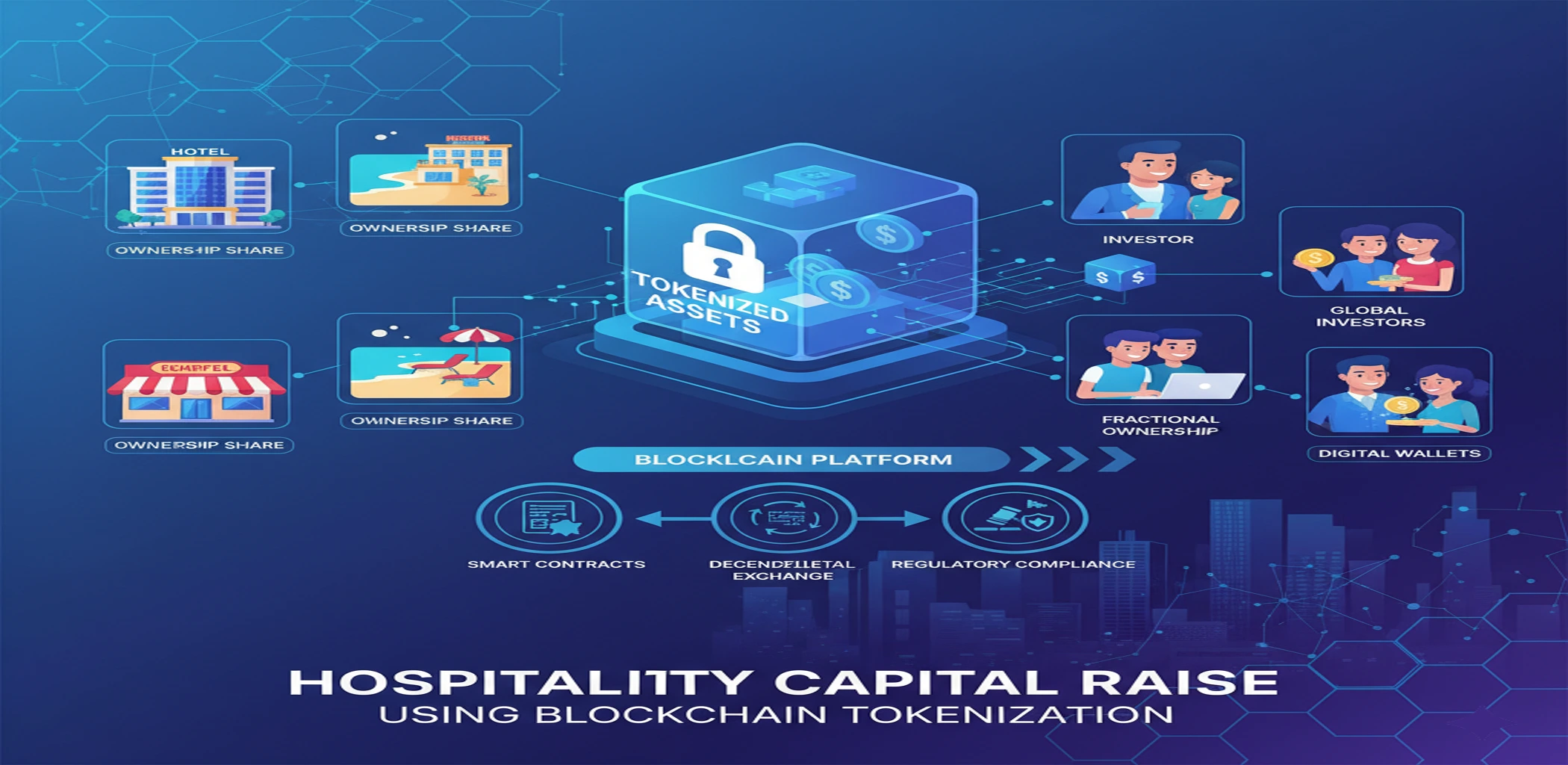
The hospitality industry is one of the most capital-intensive sectors, requiring significant investment in property, infrastructure, and operations. Traditional methods of raising capital, such as bank loans, private equity, or crowdfunding, often come with high costs, lengthy processes, and limited accessibility. However, the emergence of blockchain technology and tokenization has opened up new avenues for hospitality owners to raise funds more efficiently and inclusively.
Blockchain tokenization is the process of converting real-world assets, such as hotels, resorts, or vacation properties, into digital tokens that can be traded on blockchain platforms. These tokens represent ownership or investment rights in the underlying asset, enabling fractional ownership and liquidity. This article explores how hospitality owners can leverage the blockchain tokenization ecosystem to raise capital, the benefits it offers, and the steps involved in the process.
Understanding Blockchain Tokenization
Blockchain tokenization involves creating digital tokens that are backed by real-world assets. These tokens are stored on a blockchain, a decentralized and immutable ledger that ensures transparency, security, and traceability. In the context of the hospitality industry, assets such as hotels, resorts, or even individual rooms can be tokenized.
There are two primary types of tokens used in tokenization:
- Security Tokens: These represent ownership or investment rights in an asset and are subject to regulatory compliance. They often provide holders with dividends, profit-sharing, or voting rights.
- Utility Tokens: These provide access to specific services or benefits, such as discounted stays, loyalty rewards, or exclusive experiences at a hotel or resort.
For hospitality owners, security tokens are the most relevant for raising capital, as they allow investors to participate in the financial performance of the asset.
Benefits of Tokenization for Hospitality Owners
- Access to Global Capital
Tokenization enables hospitality owners to tap into a global pool of investors. By issuing digital tokens, they can attract investors from anywhere in the world, breaking down geographical barriers. - Fractional Ownership
Tokenization allows assets to be divided into smaller, more affordable units. This lowers the entry barrier for investors, enabling smaller investors to participate in high-value hospitality projects. - Increased Liquidity
Traditional real estate investments are illiquid, often requiring years to sell or exit. Tokenized assets can be traded on secondary markets, providing investors with liquidity and making the investment more attractive. - Transparency and Trust
Blockchain technology ensures that all transactions are recorded on a public ledger, providing transparency and reducing the risk of fraud. Smart contracts can automate processes like dividend distribution, ensuring trust between owners and investors. - Cost Efficiency
Tokenization reduces the need for intermediaries, such as banks or brokers, lowering transaction costs and speeding up the fundraising process. - Regulatory Compliance
Security tokens are designed to comply with existing financial regulations, providing a legally compliant way to raise capital.
Steps to Raise Capital Through Tokenization
1. Identify the Asset to Tokenize
Hospitality owners must first identify the asset they wish to tokenize. This could be a single property, a portfolio of hotels, or even future revenue streams. The asset should have clear value and revenue-generating potential to attract investors.
2. Legal and Regulatory Compliance
Tokenization involves navigating complex legal and regulatory frameworks. Owners must ensure compliance with securities laws in the jurisdictions where they plan to offer tokens. This may involve working with legal experts to structure the token offering and obtain necessary approvals.
3. Valuation and Token Structure
The asset must be professionally valued to determine its worth. Owners then decide on the token structure, including the number of tokens to issue, their price, and the rights they confer (e.g., profit-sharing, voting rights).
4. Choose a Blockchain Platform
Select a blockchain platform that supports tokenization, such as Ethereum, Polygon, or Solana. The platform should offer robust security, scalability, and smart contract functionality.
5. Develop Smart Contracts
Smart contracts are self-executing agreements that automate processes like token issuance, dividend distribution, and investor verification. These contracts ensure transparency and reduce administrative overhead.
6. Token Issuance and Offering
Once the tokens are created, they can be offered to investors through a Security Token Offering (STO) or a regulated Initial Coin Offering (ICO). Marketing and outreach are crucial to attract potential investors.
7. Secondary Market Listing
To provide liquidity, hospitality owners can list the tokens on secondary markets or security token exchanges. This allows investors to buy and sell tokens, enhancing the attractiveness of the investment.
8. Ongoing Management and Reporting
After the token sale, owners must manage the asset and provide regular updates to investors. This includes financial reporting, dividend distribution, and communication about the asset’s performance.
Real-World Examples of Tokenization in Hospitality
- Aspen Coin
The St. Regis Aspen Resort in Colorado tokenized its ownership, allowing investors to purchase fractional shares in the luxury property. This marked one of the first real estate tokenization projects in the U.S. - BrickMark
BrickMark, a Swiss-based company, tokenized high-value commercial properties, including hotels, enabling investors to participate in the real estate market with lower capital requirements. - Homeros
Homeros is a blockchain-based platform that allows investors to buy shares in vacation properties, providing them with rental income and the ability to use the property for personal stays.
Challenges and Considerations
While tokenization offers numerous benefits, hospitality owners must be aware of the challenges:
- Regulatory Complexity
Navigating the legal landscape can be complex and time-consuming, requiring expertise in securities law and blockchain technology. - Market Adoption
Despite its potential, tokenization is still in its early stages, and investor awareness and adoption may be limited. - Technology Risks
Blockchain technology is evolving, and issues like scalability, security, and interoperability must be addressed. - Asset Management
Tokenization requires ongoing management and reporting, which can be resource-intensive.
Conclusion
Blockchain tokenization represents a transformative opportunity for hospitality owners to raise capital in a more efficient, inclusive, and transparent manner. By converting real-world assets into digital tokens, owners can access global investors, offer fractional ownership, and provide liquidity to traditionally illiquid assets. While challenges exist, the potential benefits far outweigh the risks, making tokenization a compelling option for the future of hospitality financing.
As the technology matures and regulatory frameworks evolve, tokenization is poised to become a mainstream fundraising tool, revolutionizing the way hospitality projects are funded and managed. Hospitality owners who embrace this innovation today will be well-positioned to lead the industry into a new era of growth and opportunity.